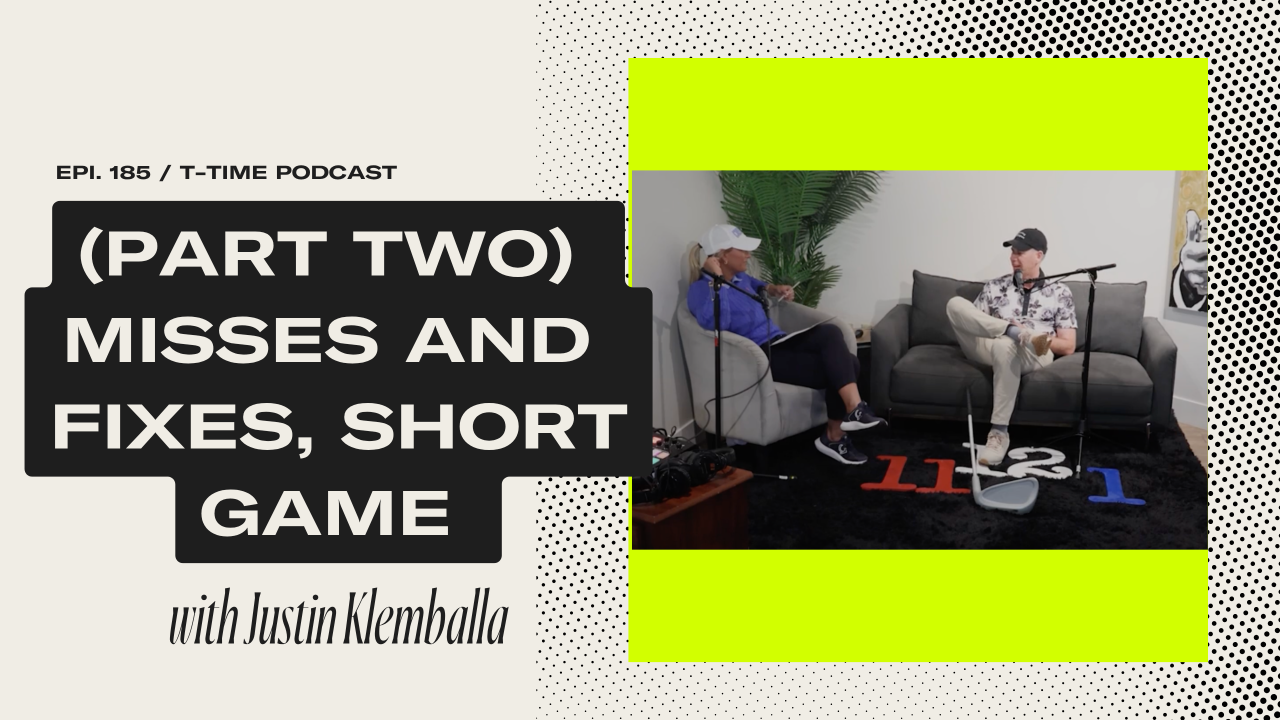
Misses and Fixes, Short Game with Justin Klemballa
If you missed Part 1, go back over that first — we covered the snap hook, topping the ball, and the slice with Justin Klemballa, creator of Breaking Bogeys. This week we pick up right where we left off, and we are heading inside 100 yards.
Chunked chips. Fat bunker shots (and bladed ones). Short putts that should not miss. And the shank — which we are going to name out loud, because pretending it does not exist has never helped anyone. Justin has a fix for every one, and they are all simpler than you think.
Before You Read On, Grab the Free Short Game Cheat Sheet
A quick-reference cheat sheet for every miss in this two-part series — miss on one side, easy fix on the other. Fold it up, put it in your golf bag, and pull it out the next time your round goes sideways.
Download it here: Misses and Fixes: Short Game
Chunking Chips
Here is the fundamental truth Justin has taught for 18 years, and almost no one has heard it:
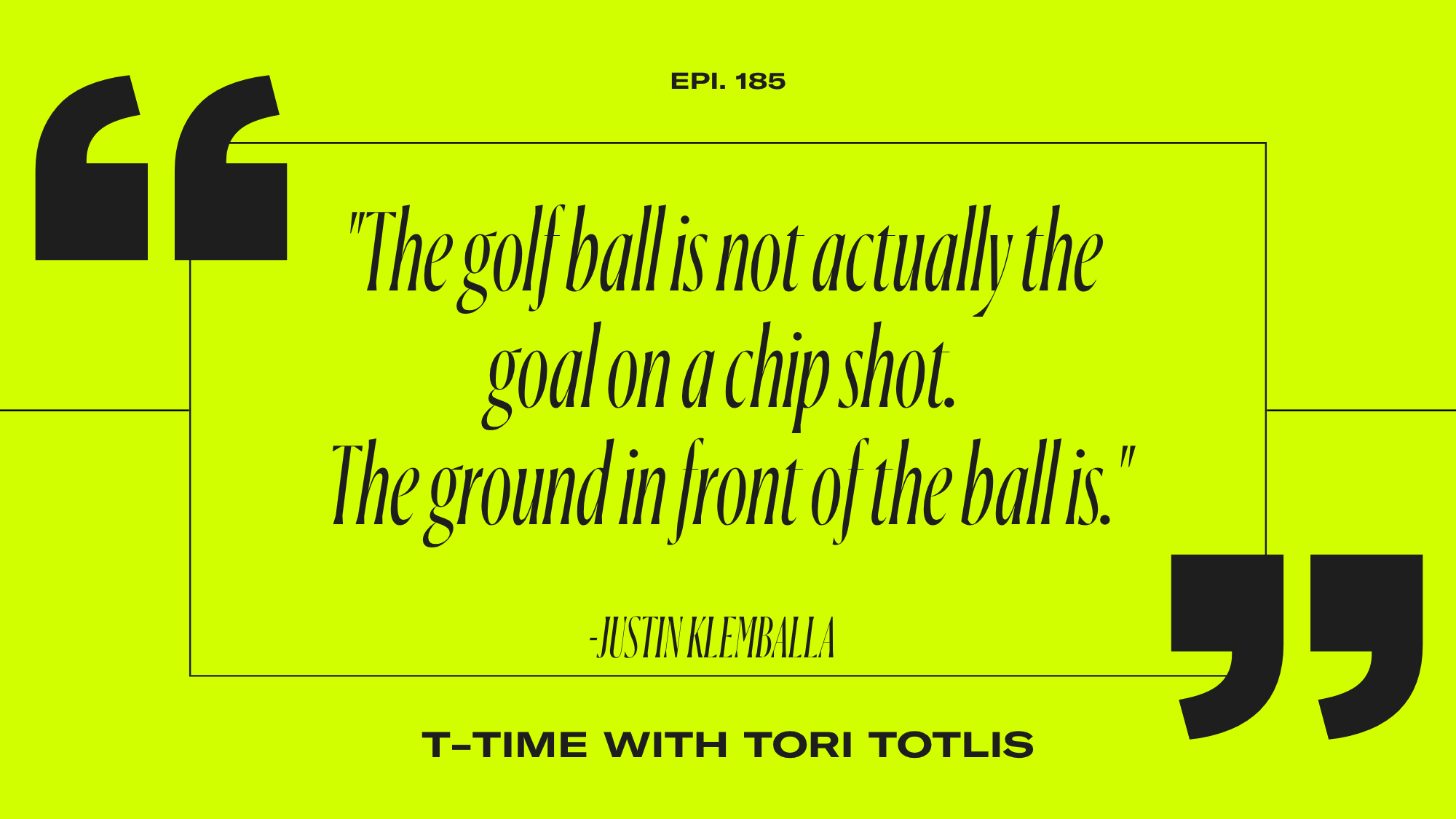
When you chunk a chip, the club is landing behind the ball. The fix is not "keep your head down" or "shift your weight" — the fix is to aim for the ground in front. All those other tips (weight on the front foot, ball back in the stance, hands forward) exist only to make hitting the ground in front more likely. They are tools toward the real goal. Know the real goal and the tools make sense.
Justin tells the story of teaching his two-year-old daughter to eat. You could give her technically correct instructions — get the elbow up, rotate the shoulder, extend the arm at this angle — and every word would be true and completely useless. Or you could just help her aim the fork at the food. External focus on where the club is going beats internal focus on what your body is doing. Every time. For every golfer.
One drill: hit practice swings next to the ball before you chip and look where the club is brushing the ground. Is it behind the ball? You have your answer. Get that club to land in front and trust that the loft will do the rest.
Fat Bunker Shots (and thin ones too)
The greenside bunker is one of two exceptions to the "hit the ground in front of the ball" rule. In a bunker, you want the club to land one to two inches behind the ball — not in front of it.
Justin's formula: draw two lines in the sand perpendicular to your target (legal only in casual play, not in tournaments). One line on the outside of the ball, one on the inside. Your divot should be one-third behind the ball-side line and two-thirds in front of it. Too much behind? You chunked it and it stayed in the bunker. Divot all in front? You bladed it over the green. The formula is one-third, two-thirds — and once you can see it in the sand, you can fix it.
A few things most players get wrong in bunkers:
Swing Faster, Not Slower
A 10-yard bunker shot still requires a full-speed swing. The ball goes nowhere on a slow swing because you lose all the momentum that was supposed to blow through the sand. It is counterintuitive and it is correct.
Do Not Open Your Stance
This is advice that got handed down for decades, and Justin disagrees. The ball goes in the direction you swing the club through the sand — not the direction the face points. Most bunker misses go left because people open their stance and aim left. Square up, open the face, and swing toward the target.
Grip Pressure Kills the Bunker Shot
If you grip at a four out of ten and then squeeze up to ten at impact because you are scared, the club rises just enough to blade the ball. Fear causes the squeeze. The squeeze causes the blade. You did not pick up your head — your hands did.
Short Putt Misses
One of the best female golfers to ever play the game had a rule for short putts: she never watched them go in. She listened.
Annika Sorenstam would putt makeable putts and then listen for the ball to drop into the cup. She did not look. If she heard a sound, she made it. If she heard nothing, she missed. That discipline is the whole tip.
Looking up early on a short putt does several bad things at once: it slows the putter, it changes the face angle, it changes the path. And there is nothing telepathic about watching — staring at the hole as the ball rolls toward it does not help the ball go in. What it does is cause you to decelerate, lift your head, and miss.
Tori's version of the same tip: head down until it hits the cup. She says it to herself throughout the round, especially after an early miss. It works because it is the right cue for exactly the right moment. And notably, this is one of the few places in golf where "keep your head down" is actually the right thought.
The Shank
We said it. We are not scared of it.
A shank happens when the ball contacts the hosel — the rounded piece of metal that connects the club face to the shaft. It has no loft. The ball goes 45 degrees in the wrong direction. It is violent and demoralizing and it happens to everyone, including Justin, including during tournaments he won.
The fix is opposite theory: if you are hitting it on the hosel, aim for the toe. Literally aim for the part of the club that has no grooves. Your instinct will be that this is wrong — but if you keep aiming for the face and keep hitting the hosel, that means the hosel is ending up where you were aiming. If you aim at the toe and miss inward, you land on the face.
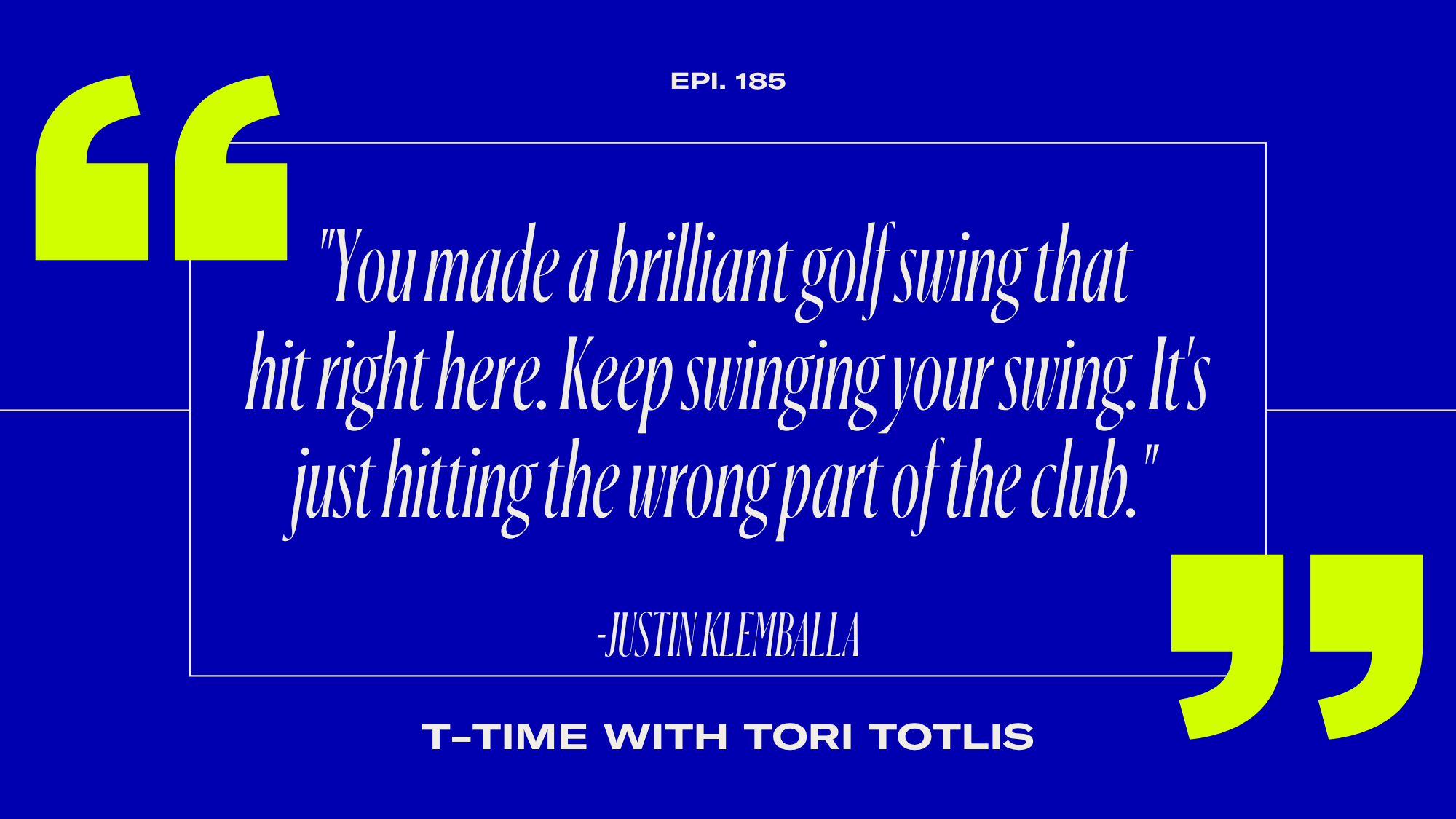
The mental trap after a shank is thinking your swing is broken. It is not. You made a great swing that contacted the wrong part of the club. Aim two inches toward the toe and hit the next one. Do not tighten up. Do not start changing things. You do not have a broken swing. You have a swing that needs to contact a different part of the club — and now you know exactly how to do that.
Listen to the Full Episode
Hit play on T-Time, Episode EP185 wherever you get your podcasts, or watch on YouTube — the clock drill is especially worth seeing on video.
Find Justin and Breaking Bogeys: YouTube , Breaking Bogeys , Instagram
Go back and listen to Part 1, where we get into full swing!
Download the cheat sheet: Misses and Fixes CheatSheet
Get in Touch!
Instagram: https://www.instagram.com/tori_totlis/
TikTok: https://www.tiktok.com/@tori_totlis?lang=en
YouTube: https://www.youtube.com/@tori.totlis