Love Him or Hate Him, What Rory Taught Us at the Masters with Evan Singer
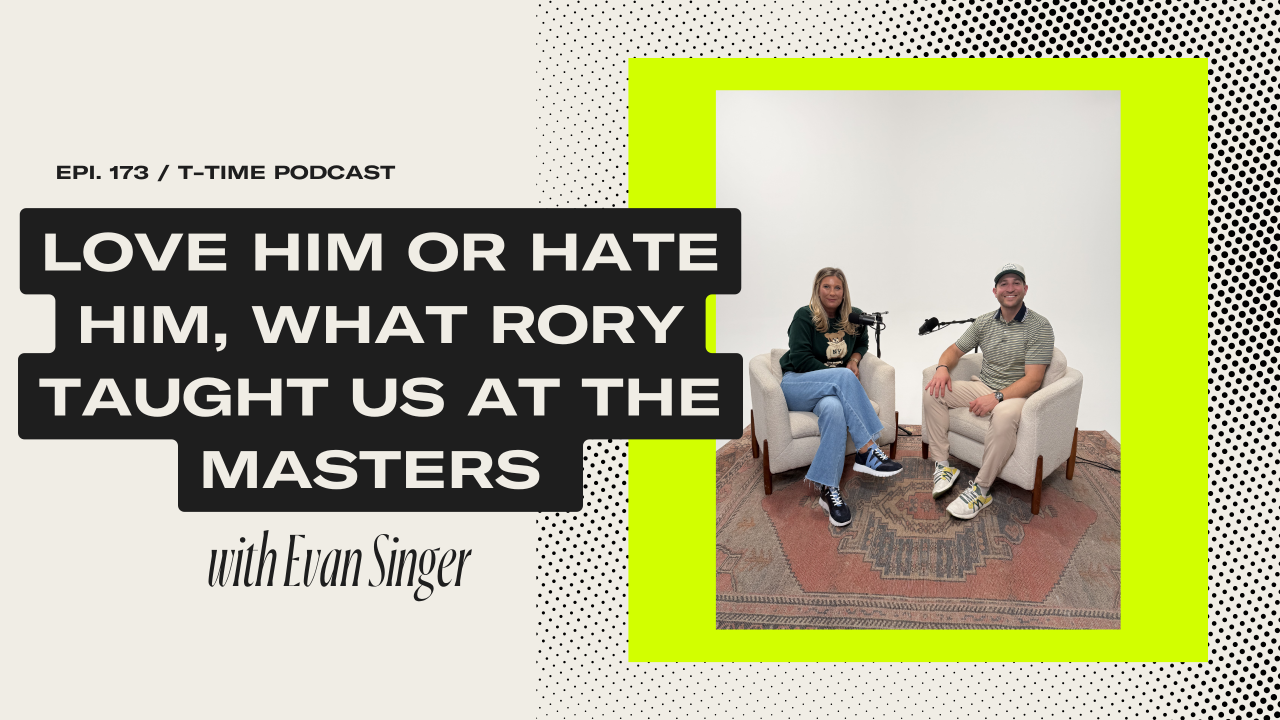
In this episode of T-Time with Tori, I sit down with Evan Singer of The Par Train podcast to talk about the Masters, Rory McIlroy's mindset, and why golf is far more about perspective than perfection. From swing changes and overthinking to letting go after bad shots, Evan shares hard-won lessons from his own game — and what the best players in the world can teach the rest of us about patience, presence, and actually enjoying the ride.
The Podcast Is Back
After stepping away for a mental health break, I'm back behind the mic — and I couldn't have asked for a better first guest. Evan Singer co-hosts The Par Train, a show known for helping golfers untangle the mental side of the game and trade frustration for genuine enjoyment.
Evan came in fresh off what he called one of the longest conversations of his 10-year career, joking that his brain was "mush" before we even started recording. You'd never know it. The energy picked up fast, and we landed in a candid discussion about how players process the game when things stop going their way.
Recovering From "Swing Change Addiction"
One of the biggest themes of the episode was Evan's honest reckoning with what he called his "swing change addiction."
For years, he chased the perfect golf swing through endless instruction and technical thoughts — only to feel the natural freedom that once made him good slowly drain away.
"I just kept getting worse."
It wasn't until recording an episode in his Origin Stories series that Evan realized he had already broken 80 before becoming obsessed with mechanics.
"I think what that did was it got rid of all of my natural good stuff."
It's a trap every golfer knows: overthinking the swing, over-attaching to results, and slowly engineering the joy out of the game.
Golf Doesn't Owe You Anything
As the conversation deepened, Evan opened up about how much frustration in golf comes from expectations. For a long time, he believed that practicing the right way and making smart decisions would be rewarded with better scores.
"All of my frustration and disappointment is because I thought I should be rewarded for that."
We also talked about how quickly confidence can evaporate after a few bad swings. Evan even laughed about the unique pain of topping drives on camera — something a lot of golfers can probably relate to more than they'd like to admit.
Masters Retrospective: The Rory & Scottie Method
Evan brought up Rory McIlroy and Scottie Scheffler when discussing how the best players handle pressure at the Masters — especially when things start sliding sideways.
Rory, he pointed out, has finally learned to stay inside his own world during the biggest moments. Even after mistakes like the water ball at 13, he resets quickly and treats the next shot as a fresh start rather than carrying frustration forward.
Scottie is a different animal. Calm, almost unbothered, with a quiet competitive edge. He rarely looks affected by what's happening around him, yet his focus and control show up exactly when it matters most.
Augusta National, ANWA, and Pressure Moments
The Masters stayed front and center throughout the episode, especially when Evan reacted to the finish at the Augusta National Women's Amateur and how quickly things can fall apart at that course.
Asterisk Talley's quadruple bogey on the 12th — after finding the water more than once — became a perfect example of how a single stretch of holes can unravel a round, no matter how well it was going.
Evan pointed out how moments like that reveal why short holes can carry so much weight when pressure kicks in and every shot suddenly feels bigger than it should.
"There's probably no other sport where you could lose the game in one place."
He also spoke about Augusta National itself — a private club that hosts one of the biggest events in sports while holding onto traditions and a feel no other course can replicate.
CBS Coverage, Kevin Kisner, and Watching the Masters
We got into how the Masters is actually experienced through TV — especially the CBS broadcast and how much it shapes what fans feel at home. Evan noted how broadcast delays and the limited "live" feel can dull the raw energy of big moments, even when the golf itself is unbelievable.
Kevin Kisner came up here too. His honest, no-filter style in the booth has injected a different kind of personality into the coverage.
"I think we want our number one athletes to have a little bit of a killer instinct."
We both agreed: watching golf and being inside the ropes can feel like two completely different worlds.
Finding Perspective Through Fatherhood
One of the most meaningful moments of the episode came near the end, when Evan connected golf to fatherhood.
He shared a story about his 17-month-old son unexpectedly cuddling with his wife during a hard day — and how the moment made him realize how often we ruin good experiences by expecting them on demand.
"I'm going to savor this."
Evan compared that mindset directly to golf. Players hit one incredible shot and immediately ask, "Where has this been all day?" — instead of simply appreciating that it happened at all.
It was a good reminder that golf isn't supposed to feel perfect. A lot of the joy comes from appreciating the rare moments when everything clicks.
Conclusion
Golf gets a lot harder when you expect it to reward effort in a straight line. Evan's experience with swing changes, the way top players like Rory and Scottie handle pressure, the chaos at Augusta, even the media drama around it — it all points to the same truth: outcomes in golf rarely match expectations.
So to all the golfers out there: stop over-attaching to results, and start accepting that good decisions don't always lead to good scores. The game stays unpredictable. Learning to sit with that is where the frustration finally starts to ease.
Get in Touch!
Instagram: https://www.instagram.com/tori_totlis/
TikTok: https://www.tiktok.com/@tori_totlis?lang=en
Youtube: https://www.youtube.com/@tori.totlis