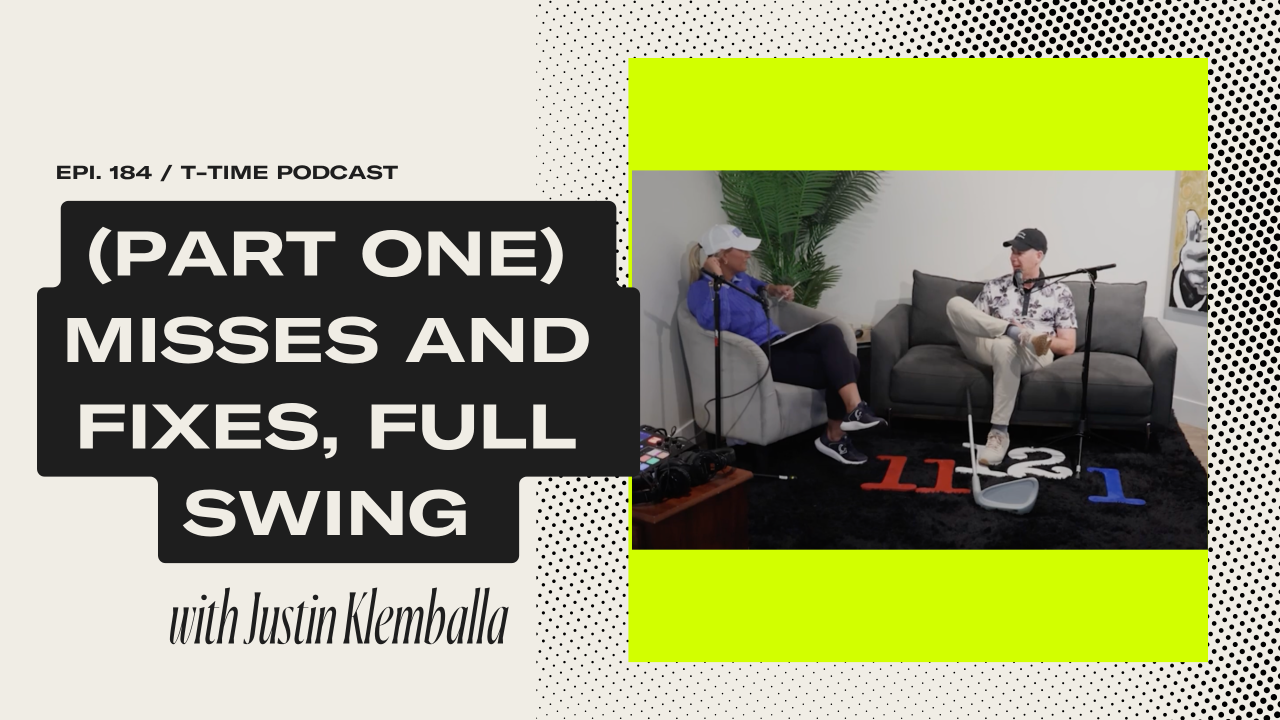
Misses and Fixes, Full Swing with Justin Klemballa
You come back from a golf trip with footage of your swing. You watch it. It is brutal. You now know you have a low hook that you are coming out of, a top that shows up uninvited, and a slice that has apparently been lurking in the background this whole time. What do you do with that?
That is exactly what happened to Tori after Bandon Dunes — and it is exactly why we called Justin Klemballa. Justin is the creator of Breaking Bogeys and one of the best golf instructors we know. This week we go miss by miss, fix by fix, through the most common full swing shots that derail a round: the snap hook, the top, and the slice. For every one, Justin gives you a simple swing thought you can actually use on the course.
Part two covers the short game — chip chunks, bunker disasters, short putt misses, and the shank. Find it in the next episode.
Before You Read On, Grab Your Free Misses and Fixes CheatSheet
A quick-reference cheat sheet for every miss we cover in this two-part series — miss on one side, easy fix on the other. Fold it up, put it in your golf bag, and pull it out the next time your round starts going sideways.
Download it here: Misses and Fixes CheatSheet
On Not Knowing Where the Ball is Going
Before we get into the misses, Justin reframes the whole game. Golf is exciting partly because you genuinely do not know what is about to happen. Every skilled golfer will tell you that. Bowling with guardrails has no challenge and no satisfaction. Golf without the uncertainty — the hook, the chunk, the slice — would not be golf.
The Pinehurst Clinic is Almost Sold Out
Justin is running a Breaking Bogeys training camp at Pinehurst in September — two weeks, almost full. The idea: if you are going on a dream golf trip, why not show up having actually practiced? He saw this firsthand on Tori's Spain trip. One woman said her favorite course of the five was the one where she played her best golf. Not the most beautiful one. The one where she played well. Train up before the trip.
The Snap Hook
This is Tori's miss. Low, hooks hard left, often feels like the hands are violently rolling over. Justin has wanted to talk about this one with her for a long time.
A snap hook has two causes: a closed club face and an inside-out swing path (seven to one on a clock). Most players who hook the ball try to swing more over the top to compensate for the closed face — but that is patching the wrong thing. The real fix is opening the face itself.
Ben Hogan struggled with a severe hook early in his career and almost quit the Tour. His two fixes became the foundation of his whole game:
Fix #1: Weaken the Grip: Take your normal grip and rotate both hands to the left on the club (for right-handed golfers). Your right hand will feel more on top, your left hand will feel more to the side. This is what weakening means — it has nothing to do with grip pressure, only position. A weakened grip opens the club face. A strong grip closes it.
Fix #2: Add Cup in the Left Wrist at the Top: If you are watching your swing and the club face is pointing up toward the sky at the top of your backswing, that is a closed face. A cupped left wrist — a slight bend toward the sky — tilts the face more toward the toe-down position, which is open. A bowed left wrist closes the face. Bow = closed. Cup = open.
Once Hogan made those two changes, he said he wished he had five right hands. Because he could throw the right hand as hard as he wanted and the ball would not go left. That is the goal: freedom to accelerate without fear.
On Swing Path
Justin uses a clock on the ground to explain this. Seven to one is inside out (a hooker's path). Five to eleven is outside in (a slicer's path). The goal is actually seven to eleven — slightly inside out, but the release sends it left of the target line. When Tori thinks over-the-top to fix her hook, that is correct instinct: she is shifting her path from seven to one toward something closer to seven to eleven.
Practice these fixes on the range first. Your first attempts will probably go far right. Stay with it.
Topping the Ball
The number one tip Justin gives more than any other.
When the ball is on a tee, the tee is the target. Not the ball. The goal is to clip the tee out from underneath. If you top the ball, you hit only the ball — the tee was never touched. The fix: put a tee in the ground next to the ball with no ball on it, take a practice swing, clip the tee. Then step up to a real ball and tell yourself: ignore the ball, knock the tee out. When you do, the ball has to go. It is physically impossible to clip the tee and top the ball.
Justin had a student that very morning who was topping shots consistently. He put a bare tee next to her ball. She clipped it on the practice swing no problem. She stepped up to the ball, forgot the tip, only hit the ball — topped it. He reminded her. She aimed for the tee. Ball sailed. The tee is the thing.
The Slice
Nine out of ten players who come to Justin's golf schools are slicers. Here is why it is so common: most golfers do not release the club. Tension causes the hands to grip too tight, which holds the face open, which creates a slice. And the tension comes from anticipating a bad shot — which then creates the bad shot.
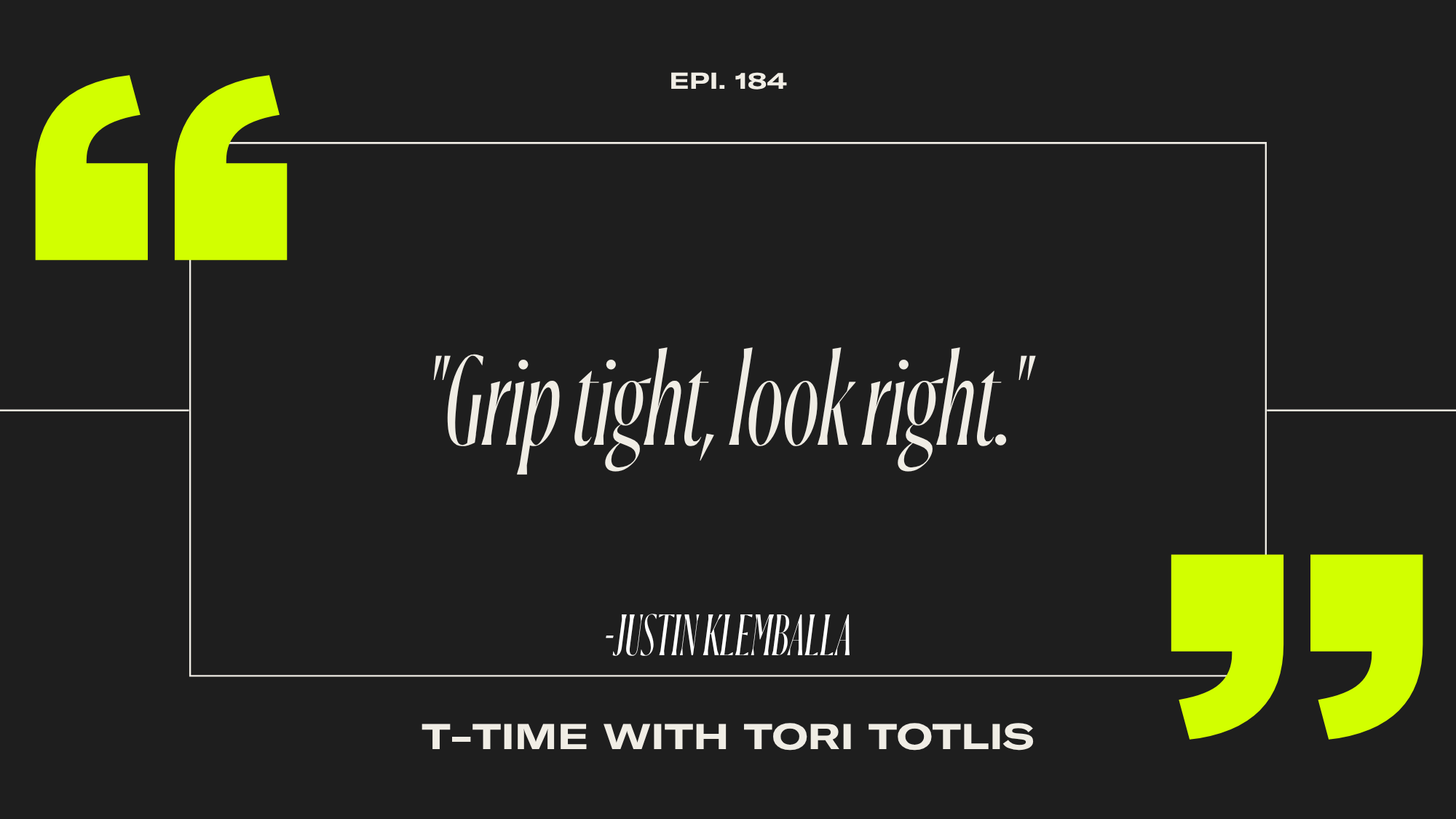
That rhyme covers it. The tighter you grip, the more open the face stays, and the more the ball goes right. Slicers are using an outside-in swing path (five to eleven) to try to compensate for their open face — it is their way of squaring it up, and it just makes the shape worse.
The fixes are the opposite of everything we said for hooks:
Strengthen the Grip: Rotate both hands to the right on the club (for right-handed golfers). The Vs formed by your thumb and index finger on each hand should point toward your right shoulder for a neutral grip. Right of that is strong. Up toward your nose is weak.
Bow the Left Wrist: At the top of your swing, get some bow into that left wrist to help close the face down.
Go Looser: Especially in the Left Hand. Justin's phrase: lefty loosey, righty tighty. The left hand gripping loose is what allows the face to release and roll closed. Most people grip the left hand like a vice and then wonder why the ball curves right.
Listen to the Full Episode
Hit play on T-Time, Episode EP184 wherever you get your podcasts, or watch on YouTube — the clock drill is especially worth seeing on video.
Find Justin and Breaking Bogeys: YouTube , Breaking Bogeys , Instagram
Don't miss Part 2, where we get into chips, bunkers, short putts, and the shank.
Download the cheat sheet: Misses and Fixes CheatSheet
Get in Touch!
Instagram: https://www.instagram.com/tori_totlis/
TikTok: https://www.tiktok.com/@tori_totlis?lang=en
YouTube: https://www.youtube.com/@tori.totlis