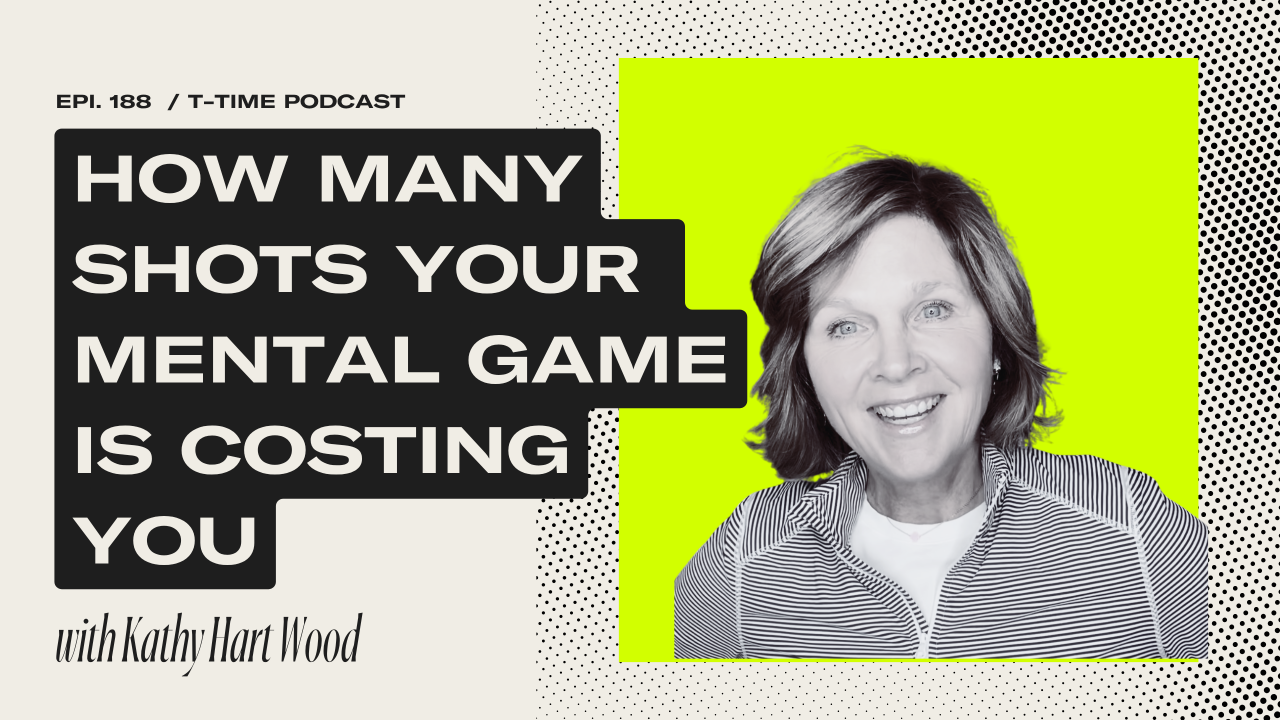
How Many Shots Your Mental Game is Costing You with Kathy Hart Wood
In this episode of T-Time with Tori, Kathy Hart Wood is back — and it has been way too long. Kathy is the founder of My Mental Caddy and Master Your Golf Brain, the host of the Think Above Par podcast, a 2 AM ideas machine, and one of the most trusted voices in my community. She's been heads-down building — private coaching, a new app, a new program called Competitive Edge — and she stepped back into the podcast fresh off the member-guest circuit with a lot to say about matching your expectations to reality. We dig into her new mental golf quiz, the Golf Serenity Prayer she created at 2 AM one night, the range-to-course gap that steals shots from almost every player, the four actual reasons you miss a golf shot (only one of them is your swing), and the three mental-game lies most golfers still believe.
The Mental Golf Scorecard
Kathy just released a free quiz that estimates how many shots the mental side of your game is costing you per round. I took it. I scored a 21 out of 60, which was humbling. Depending on your handicap, the quiz spits out an estimated 1–3 shots you're leaving out there (if you're a lower handicap) all the way up to 10–12 (if you're higher). That's not a small number when you're posting a score in a tournament.
The point of the quiz isn't the number. It's the moment where you look at the questions and realize how many of the things you thought were swing issues are actually brain issues.
The Golf Serenity Prayer
Kathy posted a version of the Serenity Prayer on Instagram a while back. It came out of a conversation with someone who'd used the original in recovery. She wrote it down at 2 AM and it's basically mental golf in a sentence.
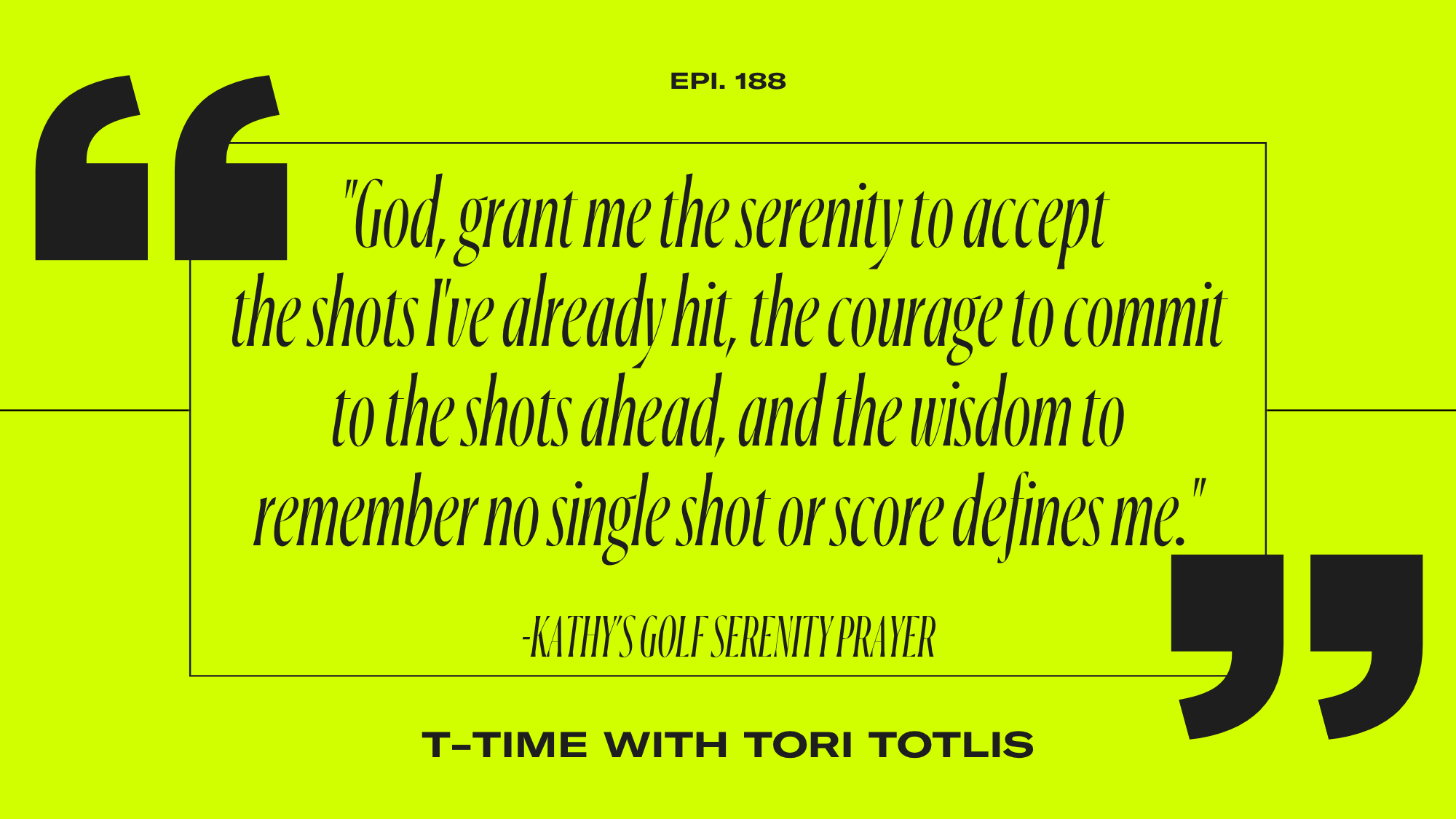
Read that twice. That's the whole game.
The Range-to-Course Gap
The most common complaint Kathy hears from students is some version of this: I strip it on the range and lose my swing on the first tee.
That gap between what your talent looks like in the practice bay and what shows up under the ropes is the mental gap. The range is relaxed, low-stakes, and consequence-free. Tournament golf is loud with meaning. Your brain reads the difference and reacts — grip pressure changes, tempo speeds up, the internal chatter starts scanning for danger.
The fix isn't to make the range harder. It's to make your rounds more consistent with each other. Same pre-shot routine on Tuesday's casual round as Saturday's tournament. Same warm-up rhythm. Same conversations with yourself.
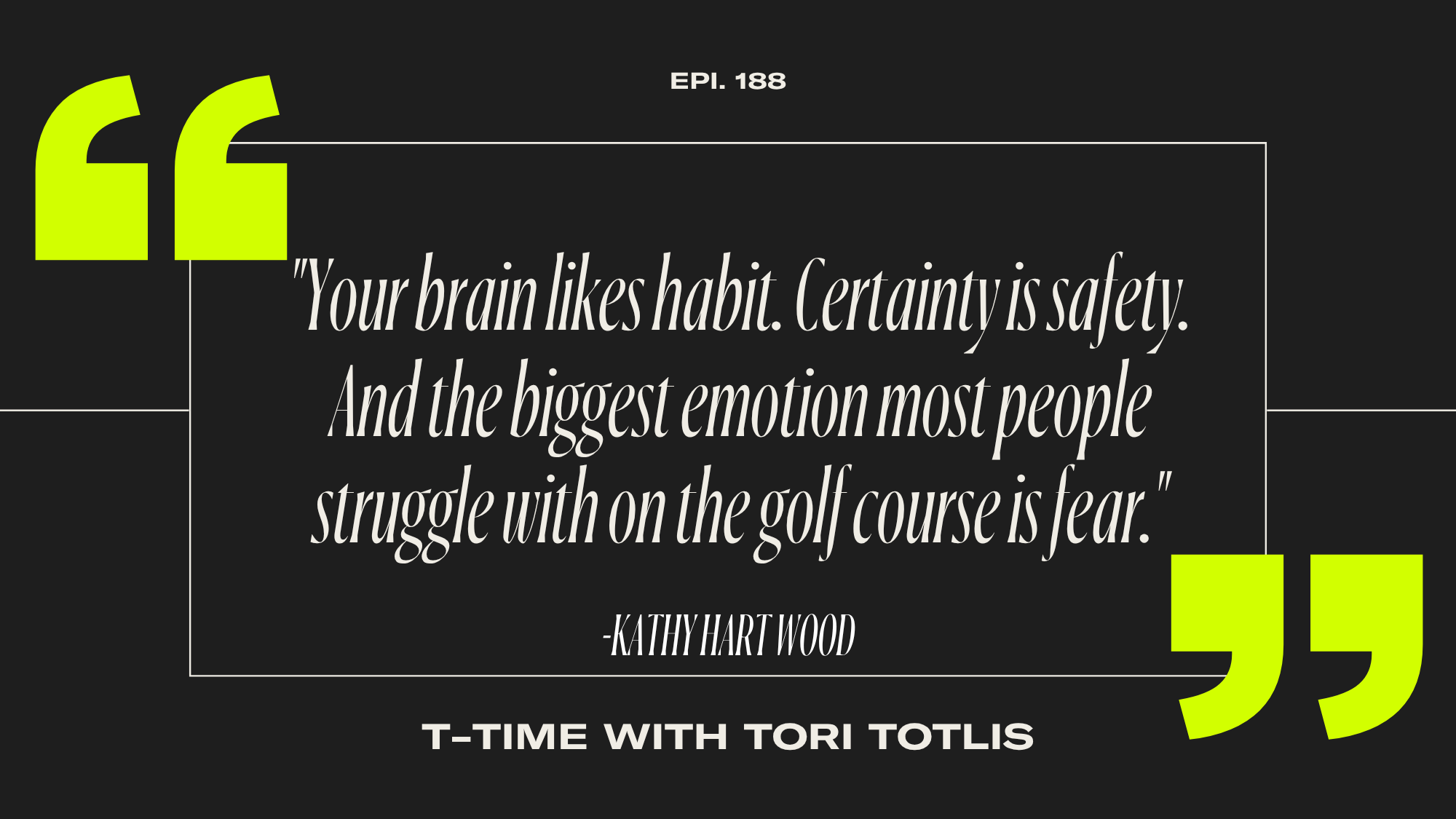
Close the gap by not making the tournament feel like a different sport.
The Four Reasons You Actually Miss a Shot
This might be the most useful thing in the entire episode. Kathy's framework for why any given shot didn't go where you wanted:
1. Mechanical. You just made a bad swing. It happens. Good information — something to work on at the range.
2. Mental. You had the right club, the right yardage, and the right idea. Then you heard yourself think don't go in the water, got tight, and pulled it. Do not run to the range to fix this. Your swing didn't break. Your brain did.
3. Course management. Right swing, right state — wrong club. Bad read of the lie, wind, or yardage. Your inner caddie needs some coaching.
4. That's golf. Good club, good swing, good state. The wind gusted. The ball hit the collar and skirted off. The face got watered and it plugged. There is no lesson to take from this except that's the game.
The reason most golfers stay frustrated is they attribute all four to Category 1 and go beat balls for two hours trying to fix a swing that wasn't broken.
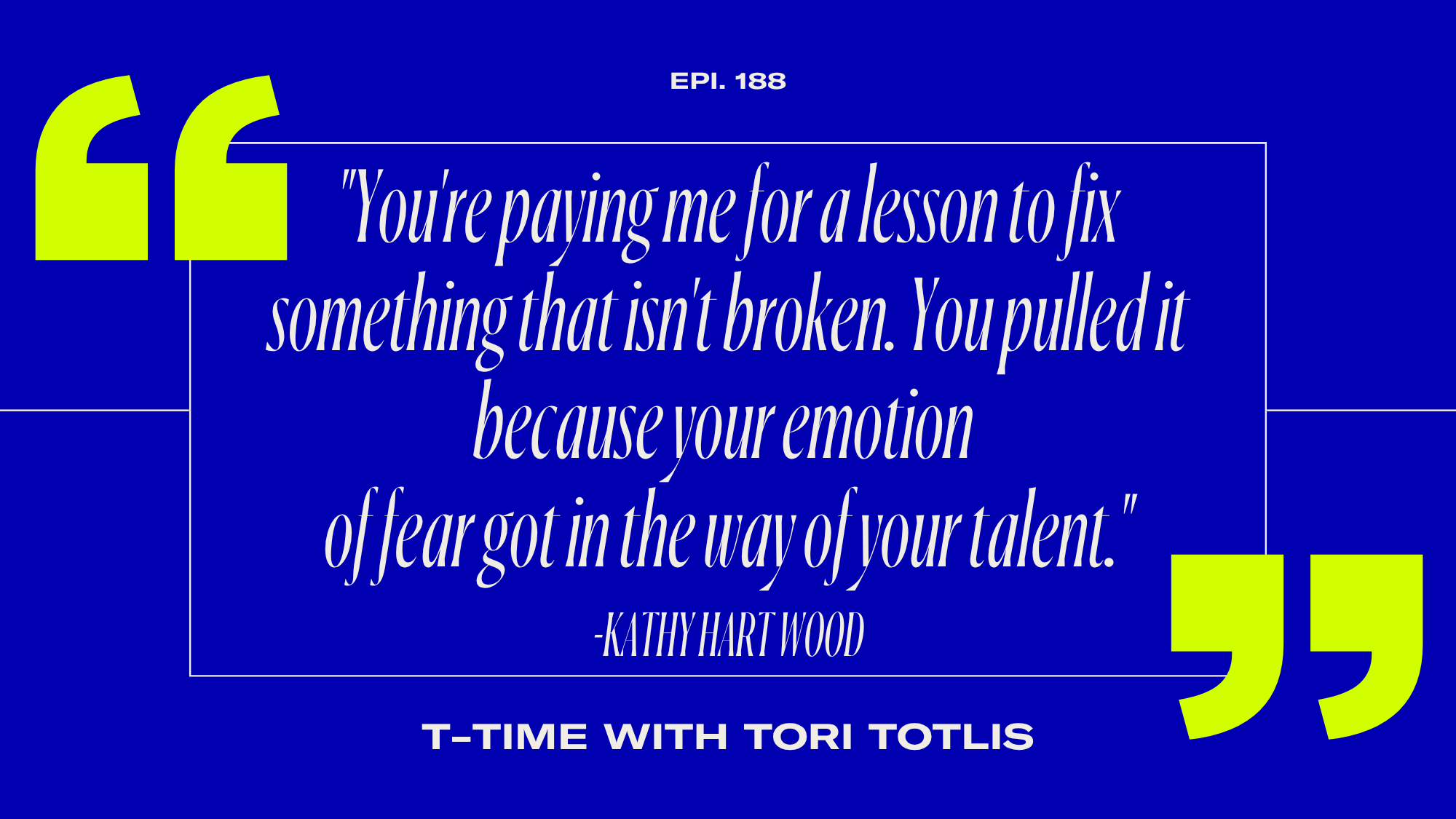
Diagnose accurately. Then treat.
Don't Let One Bad Shot Become Five
One bad shot equals one bad shot. Two bad shots equals you letting it happen.
The skill is the reset — the process you go through in the 60 to 90 seconds after a miss so that the emotion doesn't leak into the next swing. Kathy's approach starts with naming the emotion out loud in your head. There are actual studies on this: labeling what you're feeling calms the amygdala and hands the wheel back to the prefrontal cortex, which is the part of your brain that can, you know, hit a golf shot.
From there, a few power thoughts. Something you'd actually say to your best friend, not the internal monologue where you call yourself an idiot.
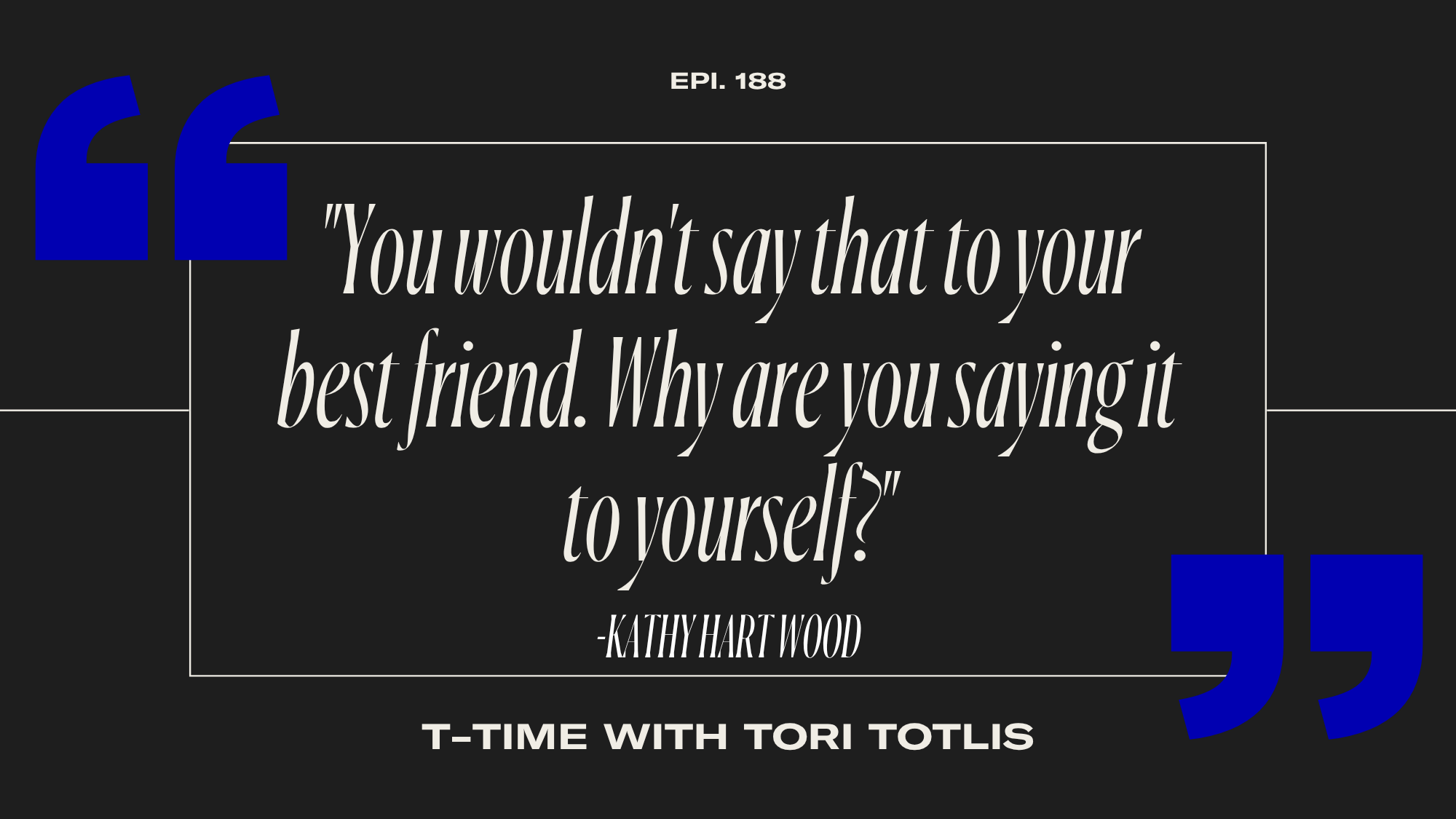
The other move Kathy loves: make a deal with your brain. I'll complain about this in the clubhouse. Not now. By the time you get to the clubhouse, you almost never actually do.
The STEAR Framework
Kathy walked us through a framework she uses called STEAR — Situation, Thought, Emotion, Action, Result. Every situation on the course creates a thought, which drives an emotion, which drives an action, which produces a result. If you don't give your brain a job, it will make one up — usually a bad one.
She talks about "processes" as little mason jars scattered around the course. A post-shot process. A slow-play process. A fairway-bunker process (hers came from years of PTSD around fat bunker shots). A post-hole process for when you just carded a big number. Even a post-eagle process — she's had clients hole out for a two and then hit the next drive OB because they had no plan for handling excitement.
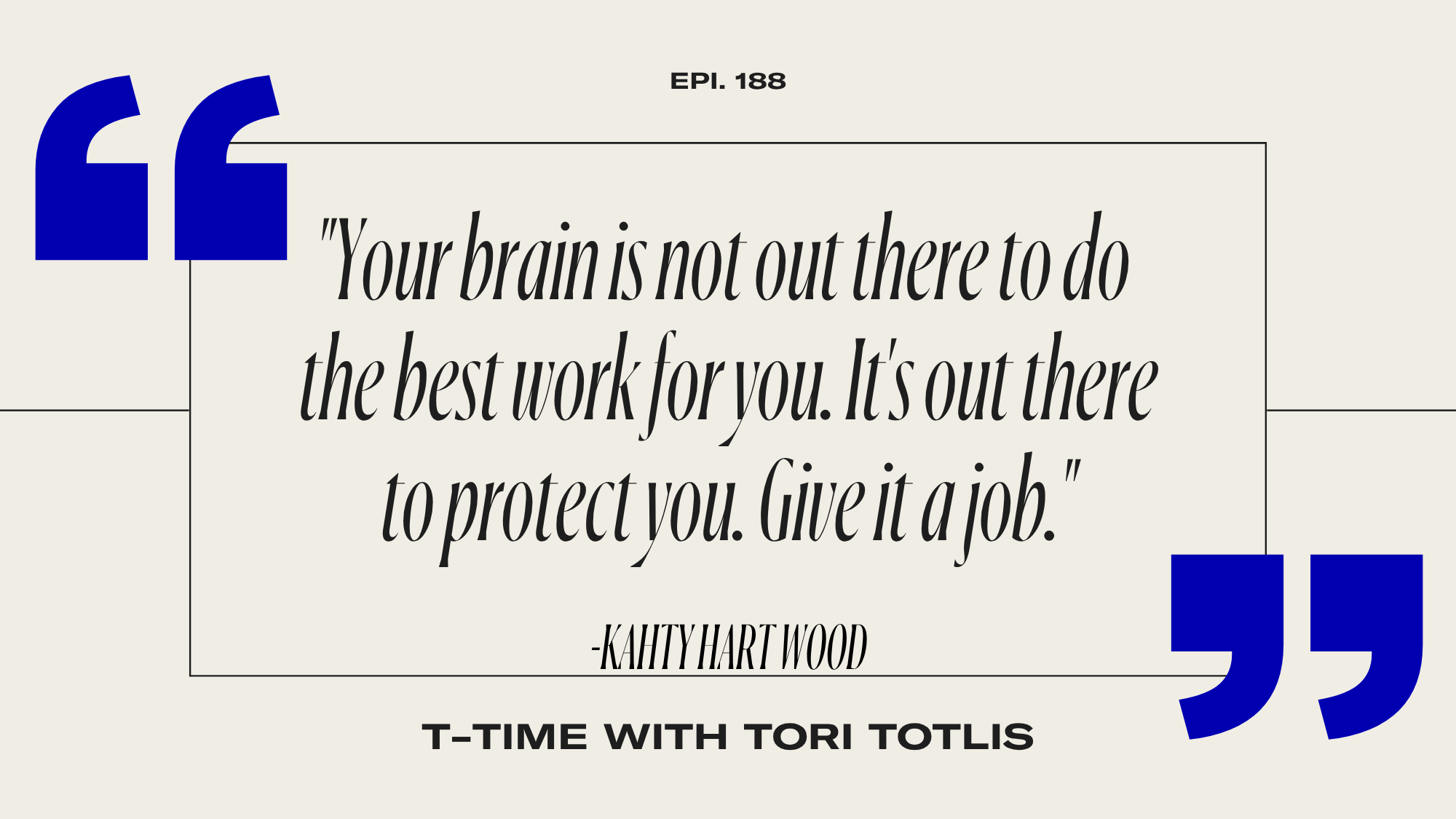
Predetermine what you're going to think when things go sideways. Or when they go incredibly right. Either way, you're not improvising.
Letting Go and Committing
Kathy calls these the two skills every golfer needs.
Letting go is what you do after a bad shot. You cannot drag it forward. Full stop.
Commitment is harder. Because it means standing over a shot with real doubt and swinging anyway. Even Rory McIlroy has talked about this — he'd rather stand over a shot not sure he has the right club and commit fully than stand over the right club with a doubtful, steery swing.
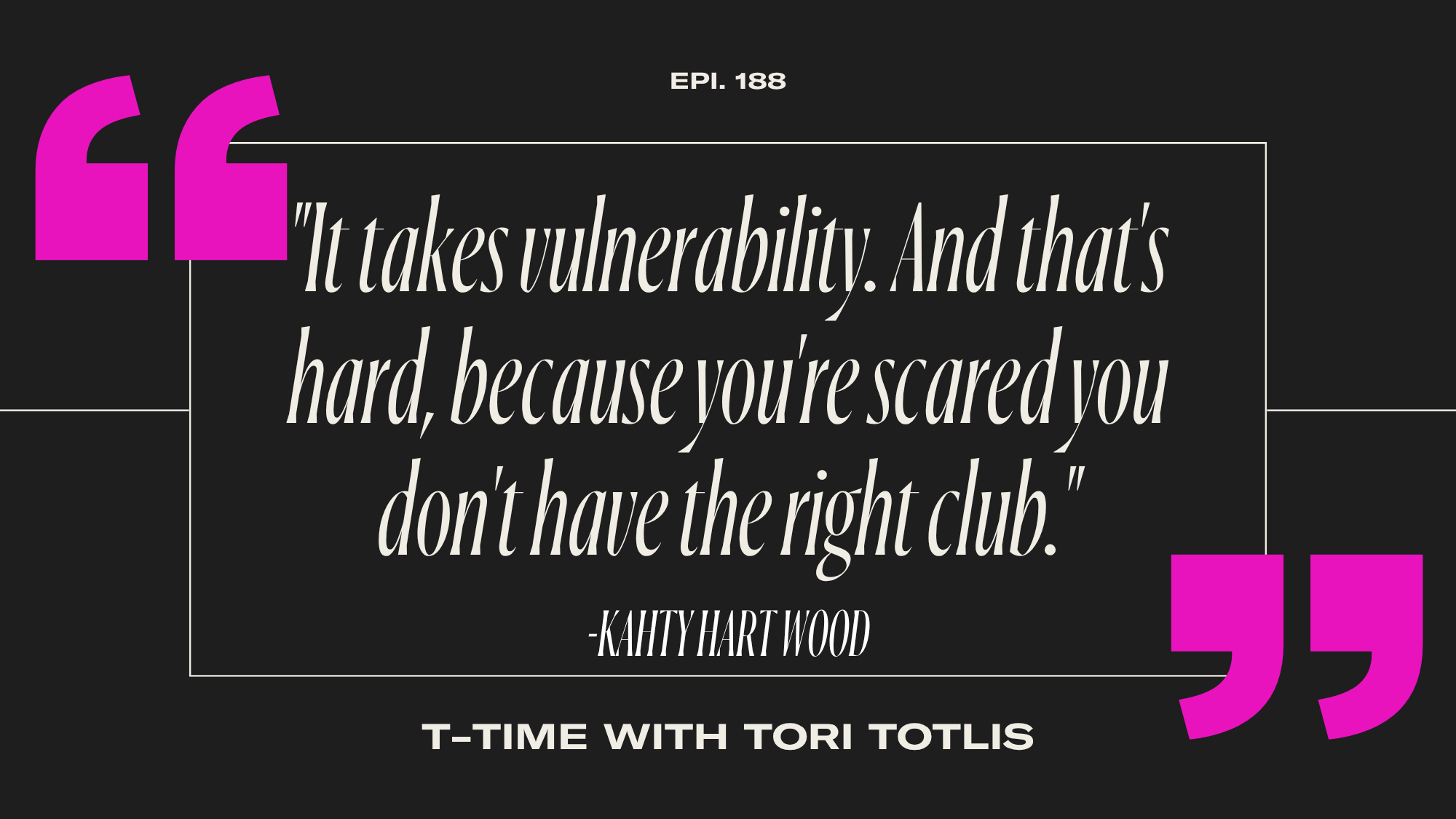
Which is why having a to-go shot — Kathy's dad taught her this — matters so much. A knockdown, a punch, a stock shape you own. When your regular swing is misbehaving, you don't try to fix it on the golf course. You reach for the shot you trust and get on with your round.
Detach From the Number
The trap a lot of us fall into is tying our identity to our score. Good shot equals good person. Bad shot equals bad person. Kathy lived that for years playing professional golf — the day the number was ugly, so was her self-image.
The alternative is treating your golf game like a scientist would. Look at what happened. Get curious. Don't take it personally.
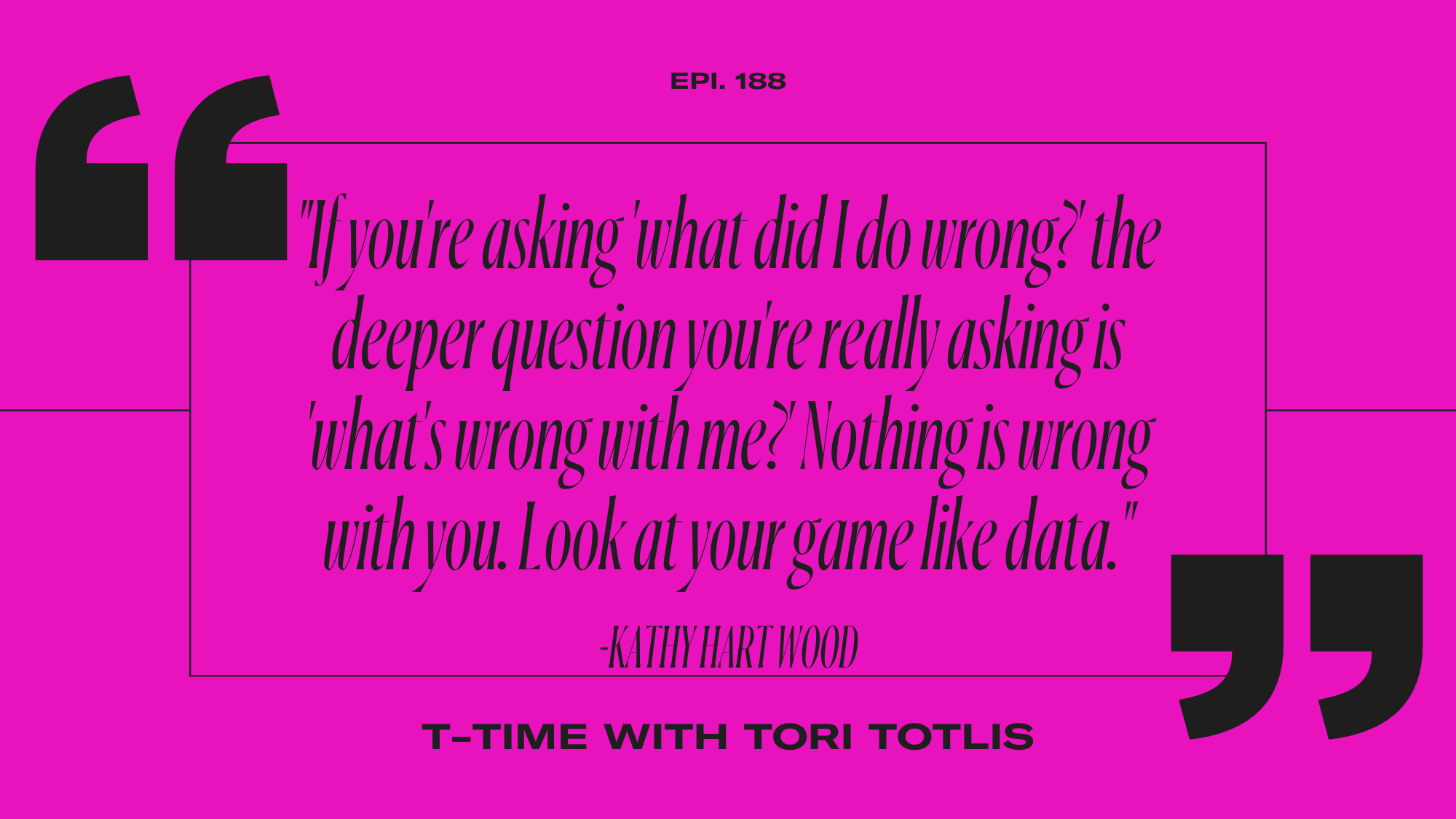
She's also built a Mental Golf Index inside My Mental Caddy — think of it like your handicap index, but for the mental side. A 20-handicap with an 8 mental index is getting everything possible out of their talent. A 10-handicap with a 30 mental index is leaving strokes everywhere.
The Three Mental Game Lies
Kathy did a full podcast on this, but the cliff notes are worth carrying with you:
Lie #1: Think positive. "I'm a great putter" doesn't work if you don't actually believe it. Your brain calls the bluff. The upgrade: find something you do believe. "Sometimes I putt well." Neutral is often more useful than positive.
Lie #2: Confidence comes from playing well. If confidence is tied to results, you lose it the second you miss. Real confidence comes from how you talk to yourself when things aren't going well — from knowing you'll have your own back regardless of the score.
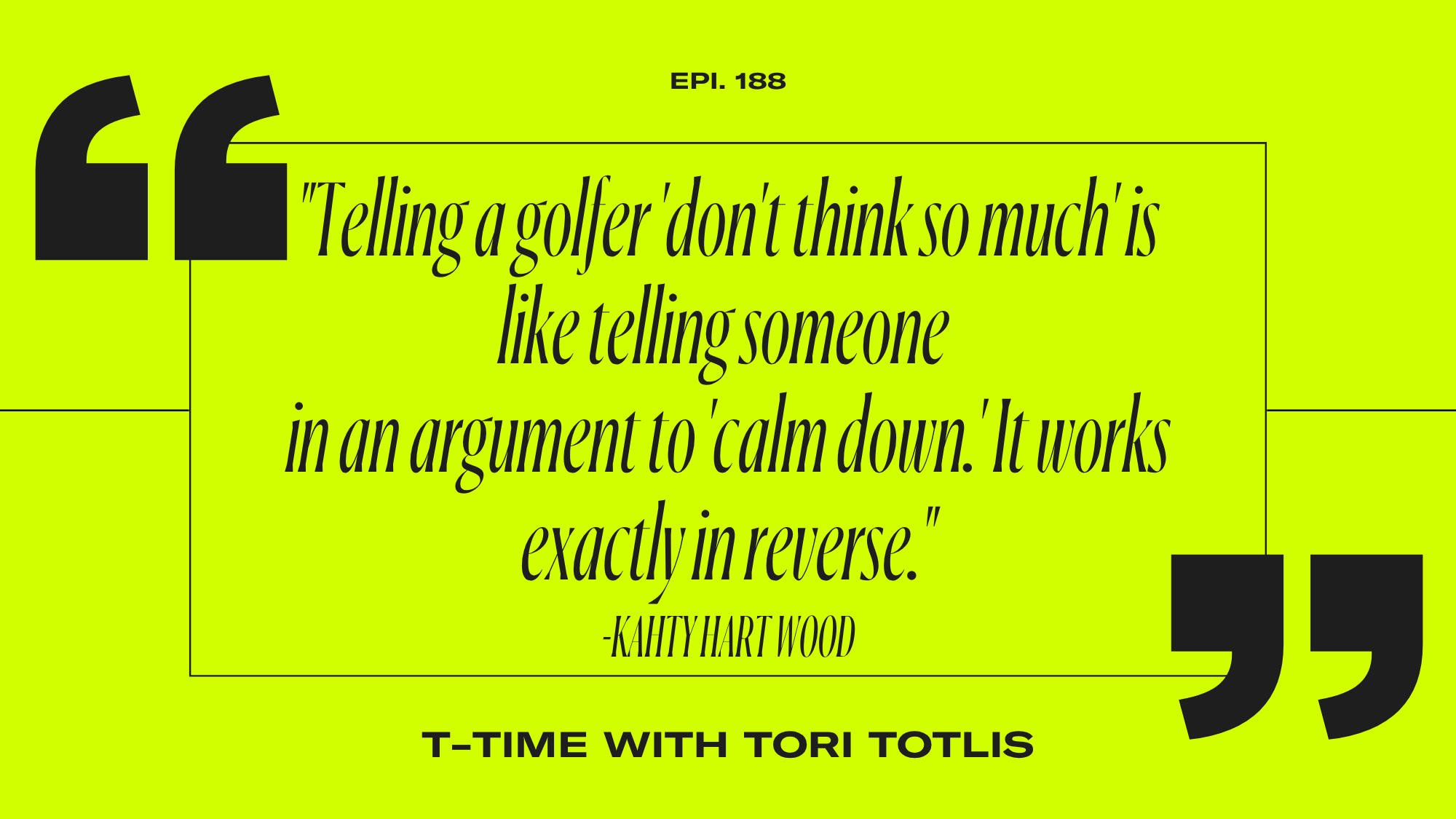
Lie #3: Just don't think so much. Your brain has 60,000 to 70,000 thoughts a day. You cannot turn it off. The goal isn't to stop thinking — it's to direct the thinking.
Default to Tempo
When your swing feels off mid-round, don't try to rebuild it between shots. Kathy's move: default to tempo.
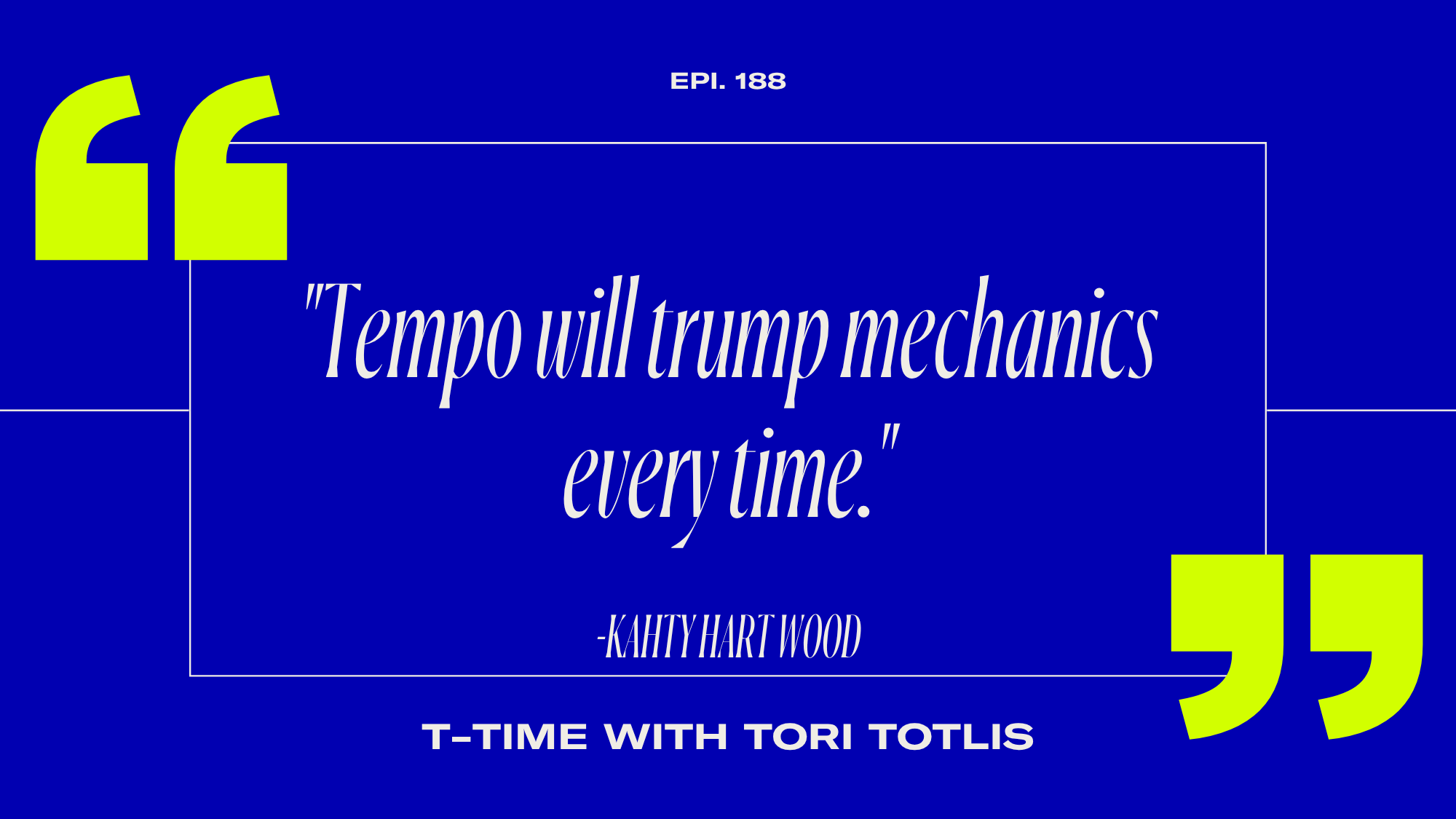
If you can get your rhythm and your beat right, your body will find a way to get the club to the ball — even if your mechanics are a little sideways that day. If you're squeezing the grip and swinging out of your shoes, no mechanical adjustment is going to save you.
Also — a nice reminder from Kathy — your swing doesn't disappear overnight. If your swing is genuinely hard to build, it's also hard to lose. You didn't wake up a different golfer. Trust that.
18 Proud
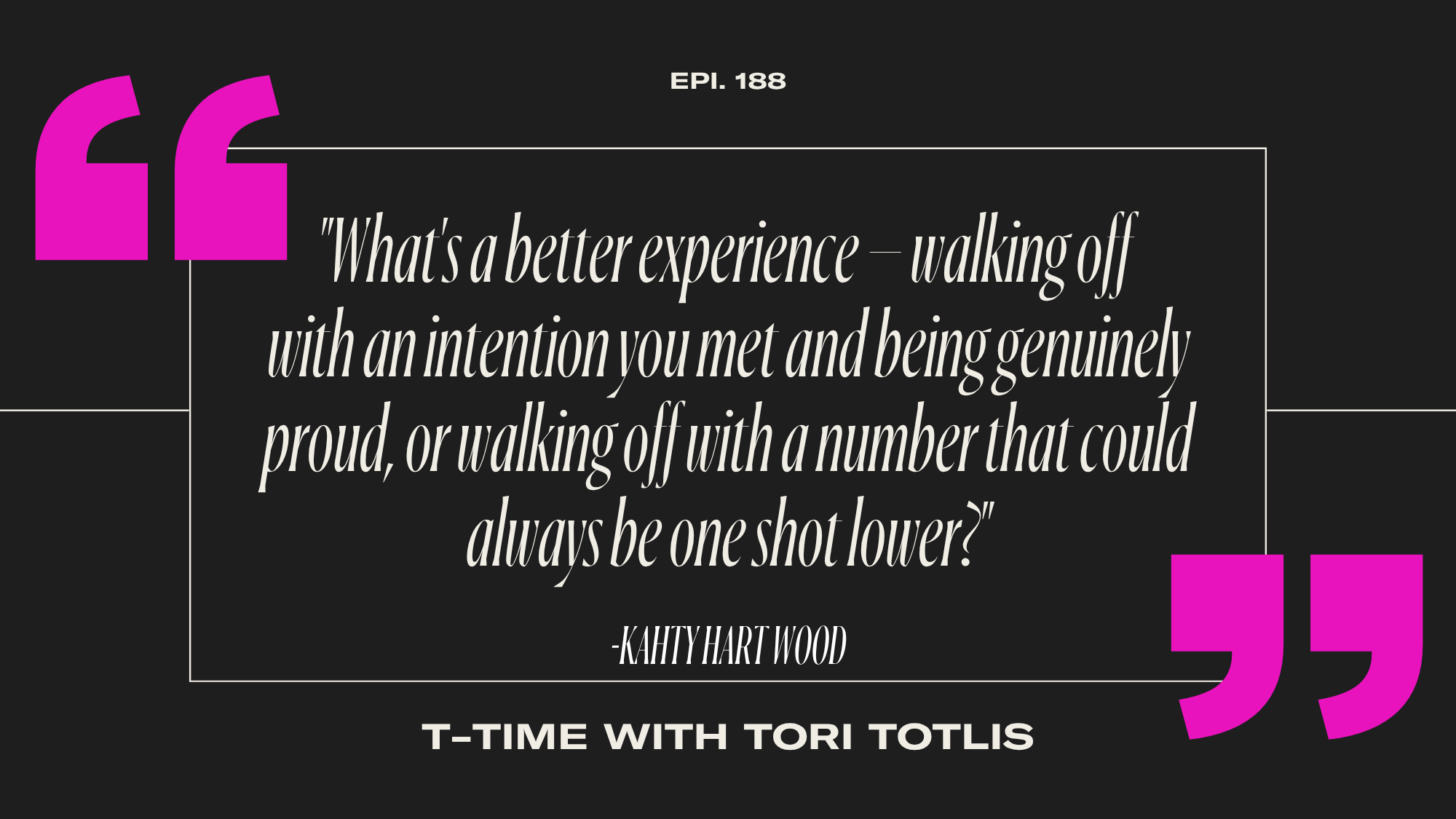
The most beautiful concept from the episode came at the end. Kathy calls it 18 Proud — the intention you set at the start of the round about how you want to show up, independent of the number on the scorecard.
Maybe your intention is I'm going to reset cleanly after every bad shot. Maybe it's I'm going to be nice to Betty in my group even though she drives me up a wall. Maybe it's I'm going to run my pre-shot routine every single time.
Whatever it is, if you can walk off 18 and say I did that thing, you can't lose.
Her clients text her 18 Proud after rounds. Sometimes 9 Proud. Sometimes it drifts off the course entirely — 18 Proud in life.
Conclusion
The through-line of the whole conversation with Kathy is that golf isn't about eliminating mistakes. It's about not letting the mistakes eliminate you. The gap between the range and the course is mental. The reasons you miss are mostly mental. The way you handle the next shot is entirely mental. And the best round you'll ever play is the one where you walk off 18 proud of how you handled all of it — not the one where the number happened to be small.
Kathy is a treasure. Take the quiz, follow her, and if you're anywhere near a mental-game reset, do yourself the favor.
All her links, the quiz, the podcast, and everything else are below. See you next episode.
Listen to the Full Episode
Hit play on T-Time, Episode EP188 wherever you get your podcasts, or watch on YouTube — the clock drill is especially worth seeing on video.
Connect with Kathy here: Website , My Mental Caddy Quiz , Think Above Par
Get in Touch!
Instagram: https://www.instagram.com/tori_totlis/
TikTok: https://www.tiktok.com/@tori_totlis?lang=en
YouTube: https://www.youtube.com/@tori.totlis